Five things #3

Here are the five things I thought were worth sharing this week: 

  1. This article on Soviet-era bootleg music recorded on X-ray plates came across my twitter feed earlier this week and it reminded me of this episode of 99% Invisible on Bone Music. It's a great episode by one of my favourite podcasts. It's also only 14 mins long, so what are you waiting for?
     
  2. Do you think you could draw a bicycle from memory? Turns out it's not as easy as you might first think. Designer Gianluca Gimini asked friends and strangers to complete this seemingly simple task and the results are brilliant. As are his 3D renderings of these imagined bicycles.
     
  3. This episode of Startup on the rise and fall of Grooveshark is fantastic. “Their mission was a noble one: bring an end to online piracy by offering cheap, convenient, and legal access to music. Their execution, however, was less than thorough.”
     
  4. Some great advice from Mark Feldman of Bang! The Drum School on becoming a better drummer and getting the most out of your practice. Aimed at drummers but applies to anyone learning any instrument.
     
  5. If you haven't seen it already, check out the animated video for Radiohead's new single Burn The Witch. It is wonderful. Very much looking forward to hearing the whole album!

That's all for this week. Enjoy!
Five things #2
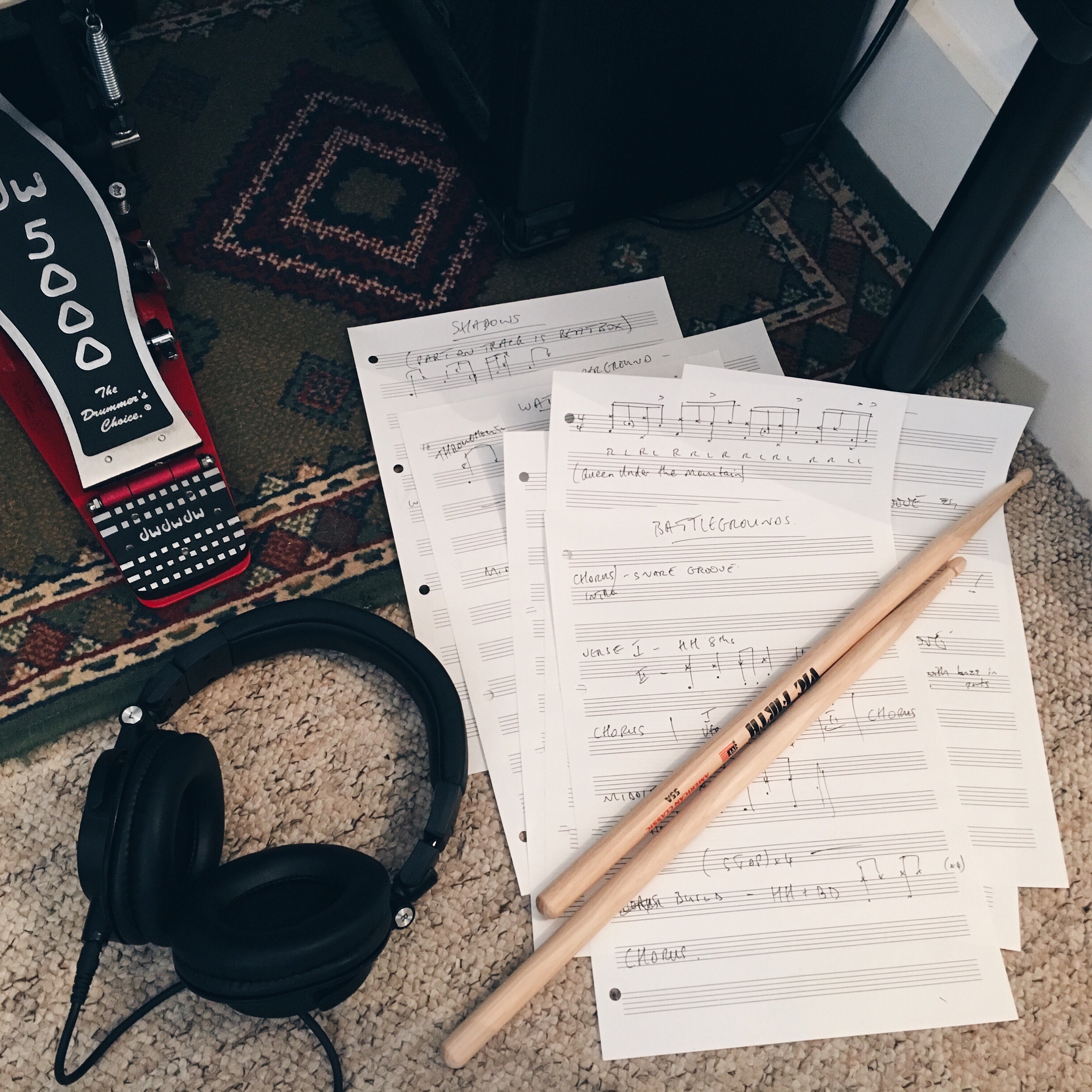
Scribbled notes for a set I'm learning for some gigs over the next few months — Emphasis on the scribbled.

Scribbled notes for a set I'm learning for some gigs over the next few months — Emphasis on the scribbled.


Here are the five things I thought were worth sharing this week: 

  1. Stefan Sagmeister on Creative Live — I'd not heard of Stefan or his work but I found this interview on his creative process fascinating, in particular his policy of taking a one year break every seven years... hmm tempting!
     
  2. I recently discovered the music of American contemporary classical composer Nico Muhly. This interview with him on Meet The Composer is fantastic. I'm also really enjoying his album Mothertongue.
     
  3. Over the weekend I started and finished reading Man's Search For Meaning by Victor E Frankl about his experiences in Auschwitz and other concentration camps. An incredible book, I struggled to put it down. Recommended reading.
     
  4. If you haven't seen this week's episode of Last Week Tonight With John Oliver, go watch it. Next time you see a news report starting with the phrase “Scientists say...” or “A recent study suggests” you'll know to approach it with a healthy dose of scepticism.
     
  5. Yesterday this video of Sting's Seven Days featuring Vinnie Colaiuta on drums came across my Facebook feed. The 5/4 groove on this track is a fine example of Vinnie's genius. He makes the odd time signature feel quite normal, so much so that most people wouldn't notice it. Sting knows how to pick his drummers! 

That's all for this week. Enjoy!

Five things #1
Trance Frendz by Nils Frahm & Olafur Arnalds

Trance Frendz by Nils Frahm & Olafur Arnalds


I'm launching a little experiment. Every Wednesday I'm going to share five things that I've recently discovered and enjoyed. These things might be books, videos, interviews, podcasts, albums, playlists... You get the idea!

So here we go. Here are the five things I thought were worth sharing this week: 

  1. Chase Jarvis interviews Seth Godin as part of CreativeLive's 30 Days Of Genius series — Seth Godin is one of my favourite thinkers and this interview is well worth the 62 minutes of your time. Seth is incredibly smart and he doesn't mince his words. I recommend you check out his books and blog too.
     
  2. I really enjoyed the recent Freakonomics podcast on the debate over talent vs deliberate practice called “How to Become Great at Just About Anything”. It features a great discussion with research psychologist Anders Ericsson, who is an expert on the science of expertise and led the research behind the 10,000 hour rule popularised by the writer Malcolm Gladwell.
     
  3. Last week I finished reading “So Good They Can't Ignore You” by Cal Newport in which he debunks the belief that following your passion" is good advice. The book came highly recommended by one of my heroes Derek Sivers. I found it to be quite repetitive but nonetheless full of useful insights. It's definitely worth reading and I wish I had done so sooner!
     
  4. As the debate on the UK's membership of the EU rages on I came across this satirical video featuring Patrick Stewart “What has the European Convention on Human Rights ever done for us?”. Very funny and makes some good points. It also features some strong language, you've been warned!
     
  5. For the last few months I've been listening to and loving Olafur Arnalds & Nils Frahm's most recent collaboration “Trance Frendz”. The album name is pretty daft but don't let that put you off. The music that makes up the album was recorded during sessions filmed at Nils Frahm's studio in Berlin, the video is up on youtube and worth a watch!

That's all for this week. Enjoy!

What are the best ways to build a strong internal clock for drumming?
metronome
 

From time to time I answer drumming and music related questions on the q&a website Quora. This is one of those answers...

Question:

I've been playing with a metronome and I have it skip beats when I practice. I just feel that there is more I could be doing to get my internal clock as tight and solid as possible. Do any expert drummers out there have any secret ways or unique to practice keeping better time?

My answer:

Practicing to a metronome that skips beats is a great idea. Have you tried this with bars? Four bars on, four bars off for example.

A couple of other suggestions...

  • Set your click to half time — Playing at 120pm? Set the click to 60bpm.

  • Click on different subdivisions — Instead of assuming the click is on the 1, 2, 3, 4 try playing with it on the offbeat (1 e AND a, 2 e AND a etc) or if you're up for a real challenge the 'e' or 'a'. I strongly recommend doing this slowly with something you’re comfortable playing first. Benny Greb's book The Language Of Drumming has some great exercises to practice in this way.

now now now

Inspired by Derek Sivers, I've added a “now” page to my website. Check it out here.

Most websites have a link that says “about”. It goes to a page that tells you something about the background of this person or business. For short, people just call it an “about page”. 

Most websites have a link that says “contact”. It goes to a page that tells you how to contact this person or business. For short, people just call it a “contact page”.

So a page on a person’s website, that tells you what this person is focused on at this stage in their life, is called a “now page”.

Learn more about the ”now page” movement at nownownow.com/about.

ps. On a related note, highly recommend you read Derek Sivers' book Anything You Want.